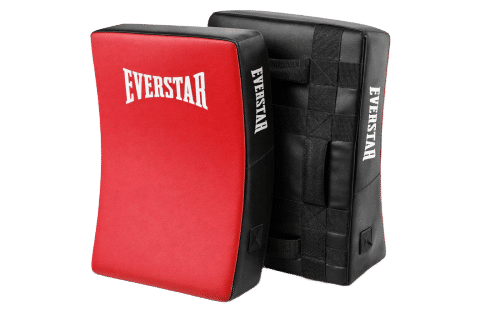
A heavy bag is where conditioning, power and timing actually get built. Pads teach you accuracy and a coach teaches you technique, but the bag is the only training tool that lets you throw at full commitment for round after round without a partner and without booking anyone's time.
The Everstar bag is available in 70cm and 100cm, both built with a reinforced outer shell, stitched and riveted hanging straps, and dense filling that holds its shape rather than settling into a solid brick at the bottom.
70cm or 100cm?
- 70cm — The right choice for juniors, for home setups where ceiling height or floor space is limited, and for fitness boxing focused on speed and combinations. Lighter, swings more, easier to hang in a garage or on a standard bracket.
- 100cm — The full training bag. Enough length to work body shots and head shots in the same combination, and enough mass to absorb heavy work without swinging wildly. This is the club and serious home-gym choice.
If you are boxing only, either length works. If you are training MMA, Muay Thai or kickboxing, choose the 100cm — you need the extra length to throw low kicks and knees at a realistic height.
Hanging it properly
A filled heavy bag generates far more force than its static weight when it is being hit. Never hang one from a plasterboard ceiling, a rafter you have not inspected, or a bracket rated only for the bag's resting weight.
Mount into a solid structural beam or a proper concrete-anchored wall bracket, and allow enough clearance to circle the bag rather than only standing square to it. A short length of chain plus a swivel at the top reduces twisting and takes strain off the straps.
Training on the bag
The most common mistake is treating the bag as a target to hit as hard as possible. Work in timed rounds — three minutes on, one minute rest — and give each round a focus: one for jab and movement, one for body work, one for combinations, one for defence and countering off the bag's swing.
Always wrap your hands and wear gloves with enough padding for the work. Bare-knuckle or lightly wrapped bag work is how boxers accumulate the hand damage that shows up as long-term joint problems. Pair the bag with a speed ball for rhythm and a floor-to-ceiling ball for timing to cover the full range of solo work.