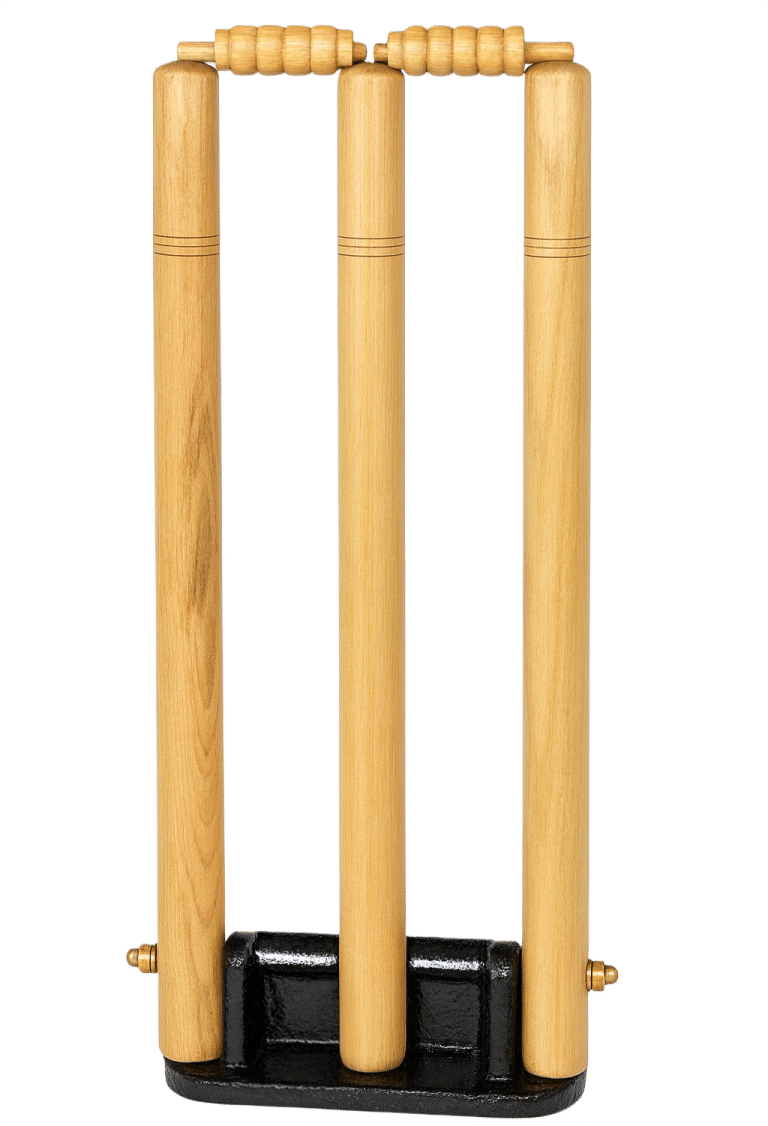
Spring stumps are the practical answer to a problem every coach knows: a net session where someone has to walk down and re-set the stumps every few balls wastes half the session.
A spring-loaded base holds three stumps upright and returns them to position after being struck, so practice continues without interruption. They also stand on hard surfaces where you cannot drive a conventional stump into the ground.
Where they earn their keep
Net practice is the obvious use. A bowler working through a long spell gets far more balls in when nobody is resetting stumps between deliveries.
They are equally useful on any hard surface — school tarmac, a driveway, an indoor hall or an artificial pitch — where a normal stump has nothing to go into. For junior coaching and school PE sessions, they are effectively essential for running a session on a netball court or playground.
Setting up
Place the base on the crease line and check that the stumps stand vertical. On a sloped or uneven surface the spring base may lean, which changes the target and gives bowlers a false read.
Regulation stump spacing means the gap between stumps must be narrower than the ball, so a ball cannot pass through without dislodging a bail. Check the spacing when you set up, particularly if the base has been packed away roughly.
Durability
The spring mechanism is the wearing part. Check it periodically to make sure the stumps still return fully to vertical — a tired spring leaves them leaning, which is worse than no spring at all.
Store them out of the weather. Rain and sun on the mechanism cause rust and degradation over a season. For schools and clubs running multiple simultaneous net sessions, budget one set per net. Add practice balls and a bat to complete a training setup.