Wrist supports brace the joint against the extension force that a loaded bar puts through it. Anyone who presses seriously runs into this eventually — not as a sudden injury, but as a slow accumulation until one day bench pressing hurts.
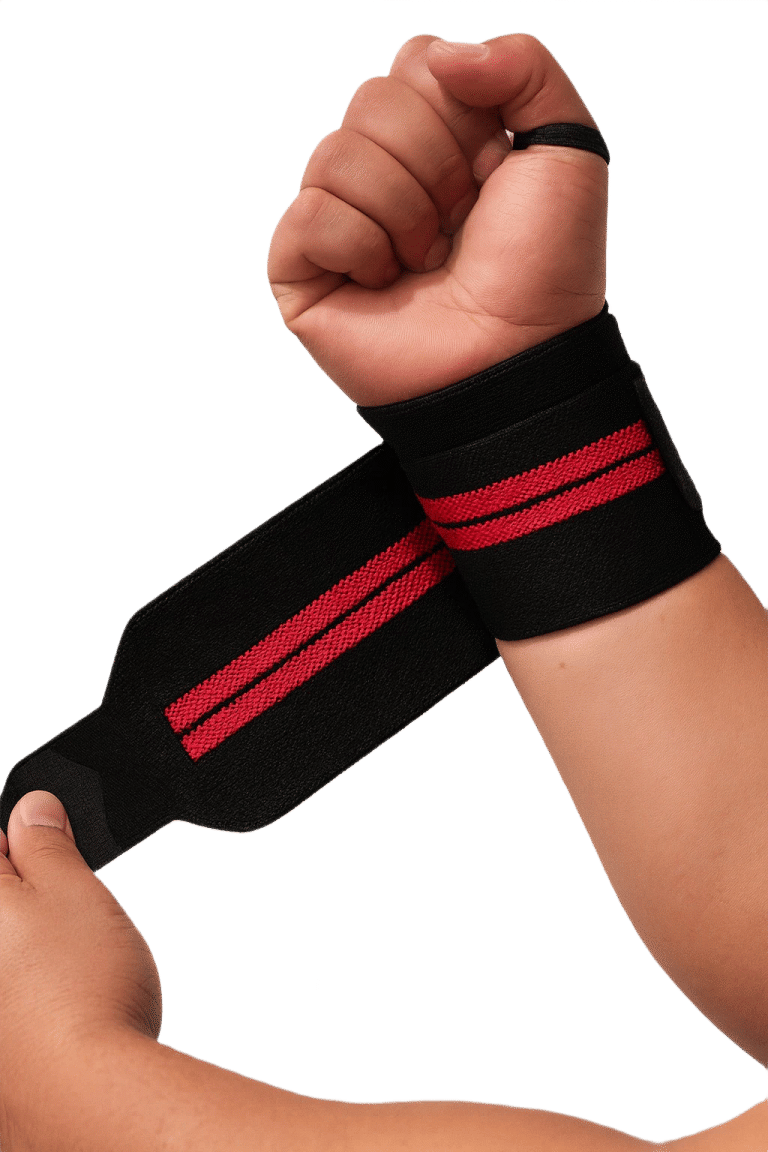
Elasticated wraps with a hook-and-loop closure so you can set the tension precisely for each set.
Which lifts load the wrist
- Bench press — the bar drives the wrist backwards over the heel of the hand.
- Overhead press — the load sits directly above and behind the wrist.
- Front squats — the front rack position forces the wrist into extension, often uncomfortably.
- Push press and jerks — the same extension under explosive load.
- Heavy dips and push-ups — sustained bodyweight through an extended wrist.
In each case the wrap keeps the wrist stacked in a straight line with the forearm, so the force travels through the bones rather than straining the joint capsule.
Setting them correctly
Apply the wrap with your wrist straight and neutral, never bent. Wrapping a bent wrist locks in poor alignment and can make the problem worse rather than better.
Tighten for your working set and loosen between sets. Leaving wrist wraps tight for a full session restricts circulation and does nothing useful. Tight for the set, loose the rest of the time.
Also useful outside the gym
The same support is worth having for boxing and MMA training, where the wrist folding under an off-square punch is the most common beginner injury.
Hand wash in cool water and air dry. Heat destroys the elastic, and a support that has lost its stretch is not supporting anything. Replace them when the stretch goes or the velcro stops gripping. For pressing work you may prefer gloves with integrated wrist support as a single piece of kit.
.webp?tr=w-480,q-80)


